
When the Lows Are Only Half the Story
Understanding the depressive side of bipolar II and why the larger mood pattern matters.
Sometimes depression is the part of bipolar disorder that gets noticed first — and sometimes it's the part that gets noticed most.
Bipolar II involves both major depressive episodes and hypomania. During depression, someone may experience low mood, loss of interest, fatigue, difficulty concentrating, changes in sleep or appetite, hopelessness, or a sense of disconnection from things that once mattered.
For many people with Bipolar II, these depressive episodes are significant and can have a substantial impact on daily life.
Look at the Pattern
When depression keeps returning, it can be helpful to look beyond how you're feeling today. Have there been periods when you needed much less sleep but didn't feel tired? Times when your thoughts moved unusually quickly, you took more risks, started numerous projects, felt unusually energized or irritable, or noticed a significant change in your usual behavior?
These experiences don't automatically mean bipolar disorder. But they are important to explore when evaluating recurrent or difficult-to-treat depression.
This distinction matters because treatment for bipolar depression isn't necessarily the same as treatment for unipolar depression.
A thoughtful evaluation considers the full history of mood, sleep, energy, behavior, medications, and other factors rather than focusing only on the current depressive episode. Treatment may include medication, therapy, sleep and routine stabilization, and other individualized supports.
This is often why people describe a sense of relief at diagnosis, even when the news itself feels heavy. It's not that anything changed overnight — it's that the pattern finally made sense.
The goal isn't simply to treat the depression in front of you. It's to understand the pattern — and build a treatment plan that supports mood stability over time.
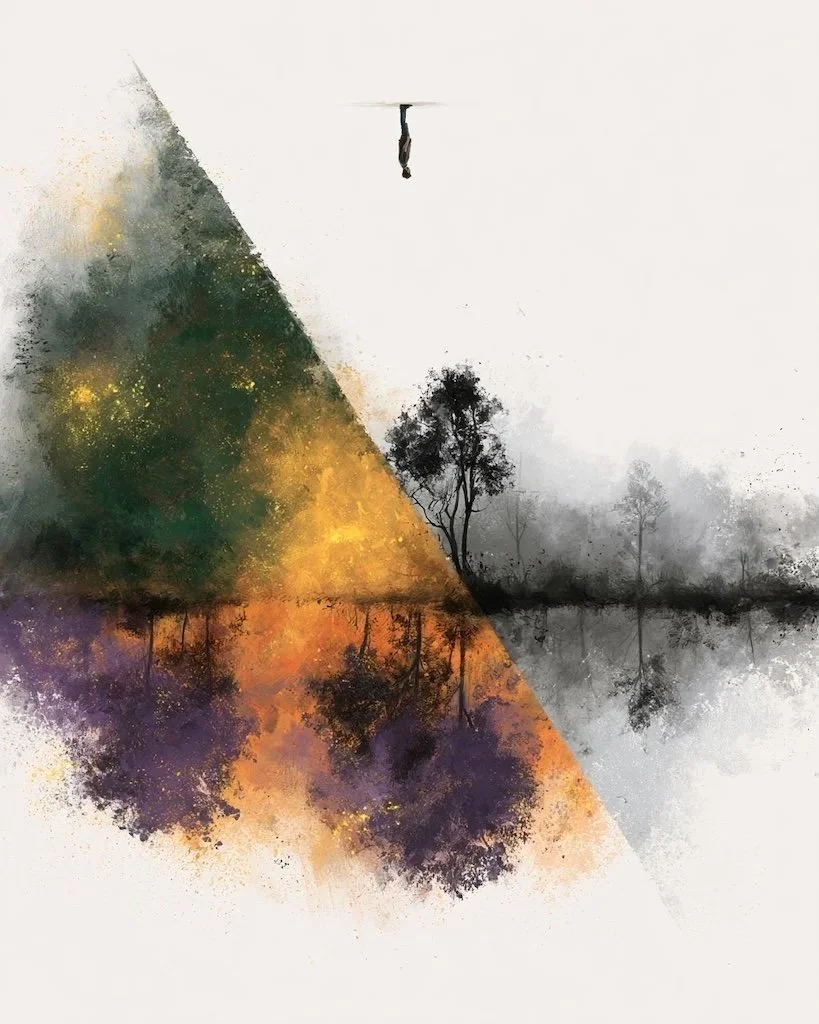
Sometimes the world doesn't actually change — but the way you experience it can.
Bipolar II Isn't a Milder Bipolar
Bipolar II is sometimes misunderstood as a less serious form of bipolar disorder. It isn't.
The distinction between Bipolar I and Bipolar II has to do with the type of elevated mood episode involved. Bipolar I includes mania, which can cause significant impairment, require hospitalization, or include psychotic symptoms. Bipolar II includes hypomania, which is less severe than mania, along with major depressive episodes.
Because hypomania is less disruptive than mania, it can be easier to overlook — especially when it feels productive, energizing, or even enjoyable.
When Hypomania Feels Like a Good Thing
A period of increased energy, decreased need for sleep, rapid thoughts, increased productivity, greater talkativeness, impulsivity, or unusual confidence may not initially feel like a problem. You may simply feel like you're finally getting things done.
But when these changes represent a clear shift from your usual baseline, they can be an important part of understanding the larger mood pattern. Looking back over time can reveal things that aren't always obvious during an individual episode.
Sources & Further Reading
Berk and colleagues (2025): Bipolar II disorder: A state-of-the-art review. World Psychiatry.
National Institute of Mental Health: Bipolar Disorder.
Medical Disclaimer: This post is for general educational and informational purposes only and is not a substitute for individualized medical, psychiatric, or mental health advice, diagnosis, or treatment. Read the full Medical Disclaimer→